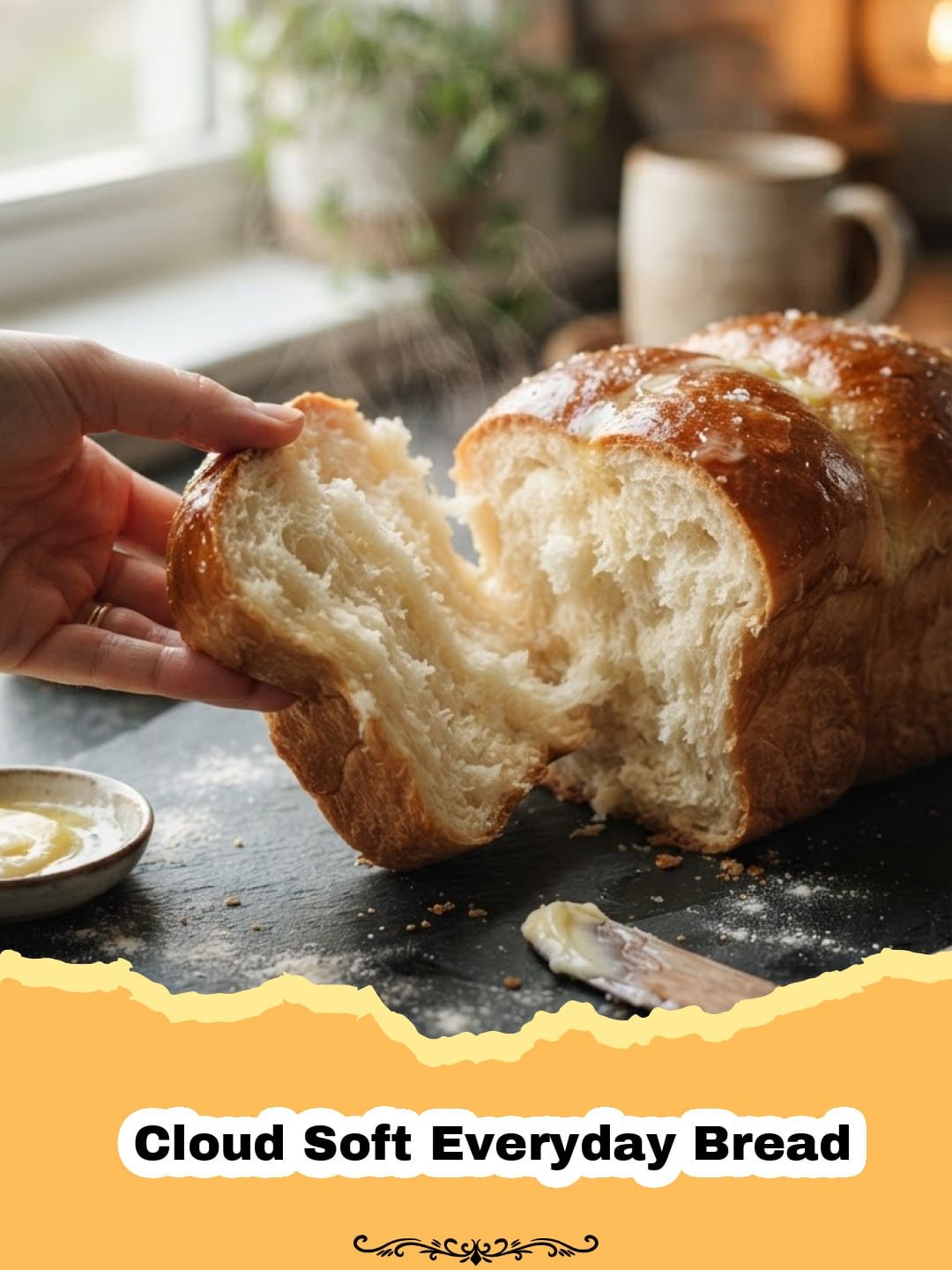
There is something truly magical about the aroma of Cloud Soft Everyday Bread wafting through the house on a rainy Tuesday morning, turning an ordinary day into something special. For years, I searched for the holy grail of baking—a loaf that was light enough to be called ‘pillowy’ but sturdy enough to hold up to a thick layer of jam or a hearty turkey sandwich. I remember my grandmother’s kitchen, always dusted with a fine layer of flour, where she would punch down dough with a strength that belied her age. She didn’t use a scale or a thermometer; she felt the dough. It took me dozens of failed, brick-like loaves to realize that the secret wasn’t just in the ingredients, but in the patience and the technique. This Cloud Soft Everyday Bread is the culmination of those years of trial and error, designed to be the only bread recipe you will ever need for your daily life.
Why This Recipe is a Must-Try
- Unbeatable Texture: This Cloud Soft Everyday Bread lives up to its name with a crumb so tender it practically melts in your mouth.
- Simple Ingredients: You likely already have everything you need in your pantry to make this Cloud Soft Everyday Bread right now.
- Long-Lasting Freshness: Unlike many homemade breads that go stale in hours, this Cloud Soft Everyday Bread stays soft for days thanks to a specific hydration technique.
- Beginner Friendly: While bread making can be intimidating, the steps for this Cloud Soft Everyday Bread are straightforward and foolproof.
Key Ingredient Notes
To achieve the legendary texture of Cloud Soft Everyday Bread, the quality and type of your ingredients matter immensely. First and foremost is the flour. While all-purpose flour can work in a pinch, I highly recommend using a high-quality bread flour. Bread flour has a higher protein content, which is essential for developing the gluten network that traps air bubbles, giving your Cloud Soft Everyday Bread that characteristic lift and bounce. If you are also a fan of sweet bakes, you might notice that the precision required here is similar to what you’d find in The Ultimate Slap Ya Momma Pound Cake Recipe: A Southern Masterpiece.
Next, let’s talk about the yeast. This recipe uses active dry yeast, which requires a short proofing period in warm liquid. Ensure your milk is between 105°F and 115°F; if it’s too hot, you’ll kill the yeast, and your Cloud Soft Everyday Bread will never rise. If it’s too cold, the yeast won’t wake up. Finally, the fat component—unsalted butter—is what provides the richness and the ‘cloud’ feel. Adding softened butter toward the end of the kneading process ensures the gluten is already somewhat formed, allowing the fat to coat the strands without inhibiting their development.
Step-by-Step Guide with Pro Tips
Making Cloud Soft Everyday Bread is a journey that starts with a simple mix and ends with a golden masterpiece. Begin by whisking together your warm milk, sugar, and yeast. Let it sit until it’s foamy, a sign that your yeast is alive and ready to work. When you start adding the flour to create your Cloud Soft Everyday Bread, do it gradually. The dough should be tacky but not sticking to your fingers like glue. If you find yourself needing to store leftovers, using a quality Basics Glass Food Storage set is a great way to keep your slices fresh and protected from the air.
Kneading is where the soul of the Cloud Soft Everyday Bread is born. Whether you use a stand mixer or your hands, you are looking for the ‘windowpane test.’ Take a small piece of dough and stretch it gently; if it can become thin enough to see light through without tearing, you have achieved perfect gluten development for your Cloud Soft Everyday Bread. During the first rise, find the warmest spot in your house—on top of the refrigerator or inside an oven that is turned off but has the light on. This environment allows the Cloud Soft Everyday Bread to double in size, developing those deep, fermented flavors that store-bought bread simply lacks. Shaping is the next crucial phase. Be gentle to avoid deflating all the air you’ve worked so hard to build up in your Cloud Soft Everyday Bread. Roll it tightly to ensure a uniform shape that will rise evenly in the pan.
Variations & Serving Suggestions
The beauty of Cloud Soft Everyday Bread is its incredible versatility. If you want a savory twist, try folding in a half-cup of shredded cheddar and a tablespoon of dried rosemary during the final stages of kneading. For a sweeter morning treat, similar to the flavors found in The Best Apple Crumble Pie with Spiced Brown Sugar Streusel, you can brush the top of the Cloud Soft Everyday Bread with a honey-butter glaze immediately after it comes out of the oven. This bread also makes the world’s best French toast; its absorbent nature soaks up custard beautifully without falling apart.
For serving, nothing beats a thick slice of Cloud Soft Everyday Bread toasted with a smear of salted butter. It is the perfect accompaniment to a hot bowl of soup or used as the foundation for an elevated avocado toast. Because this Cloud Soft Everyday Bread is so soft, it is also the ideal choice for kids’ school lunches, as it remains pliable and delicious even after a few hours in a lunchbox. Experiment with different shapes too—this dough can easily be transformed into dinner rolls or even a braided loaf if you’re feeling artistic.
Nutrition Information
| Nutrient | Amount per Serving |
|---|---|
| Calories | 185 kcal |
| Carbohydrate Content | 28g |
| Cholesterol Content | 15mg |
| Fat Content | 6g |
| Fiber Content | 1g |
| Protein Content | 5g |
| Saturated Fat Content | 3.5g |
| Serving Size | 1 slice |
| Sodium Content | 210mg |
| Sugar Content | 3g |
| Trans Fat Content | 0g |
| Unsaturated Fat Content | 2g |
Conclusion
Mastering the Cloud Soft Everyday Bread is a rewarding endeavor that brings a sense of accomplishment to any home cook. There is a deep satisfaction in slicing into a loaf you made with your own hands, knowing exactly what went into it. Whether you are a seasoned baker or picking up a rolling pin for the first time, this Cloud Soft Everyday Bread will quickly become a staple in your kitchen. So, put on your apron, clear some counter space, and get ready to enjoy the softest, most delicious bread you’ve ever tasted. Happy baking!
FAQs
Can I use all-purpose flour instead of bread flour for Cloud Soft Everyday Bread?
Yes, you can use all-purpose flour, but the texture won’t be quite as chewy and ‘cloud-like’ because all-purpose flour has less protein. If using AP flour, be careful not to over-knead.
How do I store my Cloud Soft Everyday Bread to keep it fresh?
Once completely cooled, store the bread in an airtight container or a bread bag at room temperature for up to 3-4 days. Avoid the refrigerator as it can actually dry the bread out faster.
Why didn’t my Cloud Soft Everyday Bread rise?
The most common reasons are expired yeast or using milk that was too hot (which kills the yeast) or too cold (which fails to activate it). Ensure your liquid is between 105u00b0F and 115u00b0F.
Can I freeze this bread?
Absolutely! Cloud Soft Everyday Bread freezes beautifully. Slice it before freezing so you can pull out individual slices as needed. Wrap tightly in plastic wrap and then foil, and it will last up to 3 months.
Cloud Soft Everyday Bread
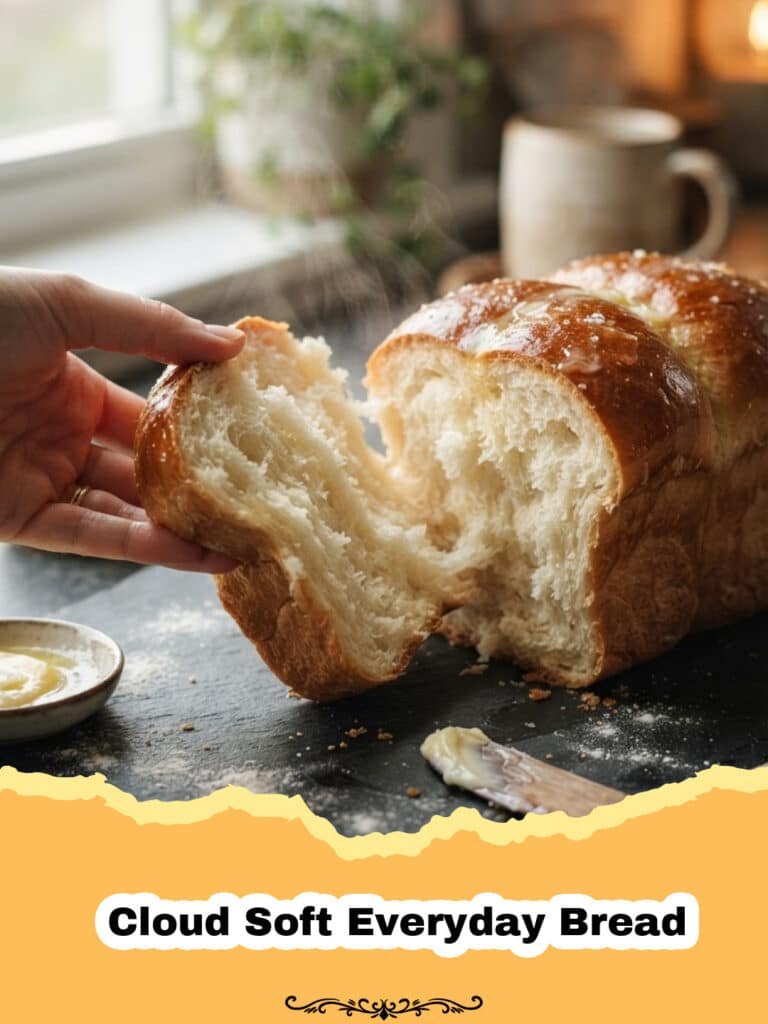
A foolproof recipe for a pillowy, buttery, and incredibly soft white bread that stays fresh for days. Perfect for toast, sandwiches, or enjoying warm with butter.
- Total Time: 2 hours 50 minutes
- Yield: 1 loaf (approx. 12-14 slices)
Ingredients
3 1/2 cups bread flour (plus more for dusting)
1 cup warm milk (110°F)
2 1/4 tsp active dry yeast (1 packet)
2 tbsp granulated sugar
1 tsp salt
4 tbsp unsalted butter, softened
1 large egg (room temperature)
1 tbsp milk (for egg wash)
Instructions
Step 1: In a small bowl, combine warm milk, sugar, and yeast. Stir gently and let it sit for 5-10 minutes until the mixture becomes foamy and bubbly.
Step 2: In a large mixing bowl or the bowl of a stand mixer, whisk together the bread flour and salt. Create a well in the center.
Step 3: Pour the yeast mixture and the beaten egg into the well. Using a dough hook or a wooden spoon, mix until a shaggy dough begins to form.
Step 4: Gradually add the softened butter, one tablespoon at a time, while kneading. Continue to knead for 8-10 minutes (by mixer) or 15 minutes (by hand) until the dough is smooth, elastic, and passes the windowpane test.
Step 5: Lightly grease a bowl and place the dough inside. Cover with a damp cloth and let rise in a warm, draft-free spot for 1 to 1.5 hours, or until doubled in size.
Step 6: Gently punch down the dough to release excess air. Turn it out onto a lightly floured surface and shape into a rectangle roughly the width of your loaf pan.
Step 7: Roll the dough tightly into a log and place it into a greased 9×5 inch loaf pan. Cover and let rise for another 45-60 minutes until the dough has risen about an inch above the rim of the pan.
Step 8: Preheat your oven to 350°F (175°C). Brush the top of the loaf with a simple egg wash (1 egg beaten with 1 tbsp milk).
Step 9: Bake for 25-30 minutes, or until the top is golden brown and the internal temperature reaches 190°F. Remove from the pan and cool on a wire rack before slicing.
Notes
Ensure your butter is truly softened at room temperature for easy integration. If the crust is browning too quickly, tent it loosely with aluminum foil for the last 10 minutes of baking.
- Prep Time: 20 minutes
- Cook Time: 30 minutes
- Category: Desserts & Baking
- Cuisine: American
Nutrition
- Serving Size: 1 slice
- Calories: 185
- Sugar: 3g
- Sodium: 210mg
- Fat: 6g
- Saturated Fat: 3.5g
- Unsaturated Fat: 2g
- Trans Fat: 0g
- Carbohydrates: 28g
- Fiber: 1g
- Protein: 5g
- Cholesterol: 15mg
Leave a Reply