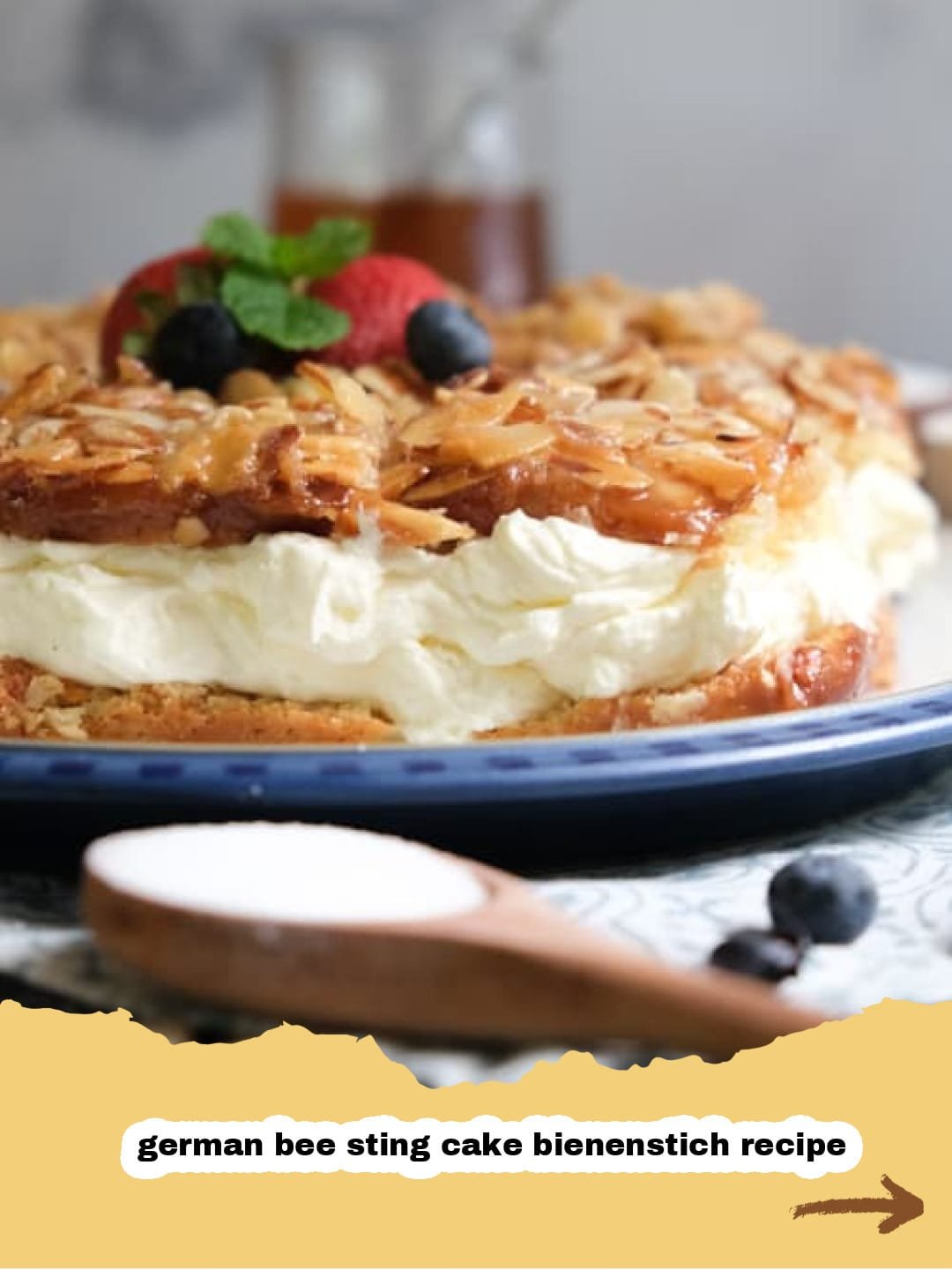
Ah, German Bienenstich (Bee Sting Cake)! Just the name alone conjures images of sun-drenched German bakeries, the sweet scent of honey and almonds wafting through the air, and the promise of a truly sublime dessert. For me, this cake isn't just a recipe; it's a journey back to my Oma's kitchen. I remember visiting her in a small village nestled in the Black Forest. Her kitchen, always warm and bustling, was the heart of her home. Every Sunday, after a hearty lunch, she'd bring out her homemade Bienenstich. The glistening almond topping, the soft yeast cake, and that incredible vanilla cream filling… it was pure magic. She'd tell us stories of the bees, how they were vital for the almond trees, and how the cake got its name – supposedly from a baker whose cake was so good, he had to ward off bee stings to protect it! As a child, I was captivated by the tales, but as an adult, I'm captivated by the taste and the tradition. Recreating her German Bienenstich (Bee Sting Cake) has become a cherished ritual, a way to keep her memory and her culinary legacy alive. It’s a labor of love, but every single bite is worth it, transporting me straight back to those sweet, golden afternoons.
Why This Recipe for German Bienenstich (Bee Sting Cake) is a Must-Try
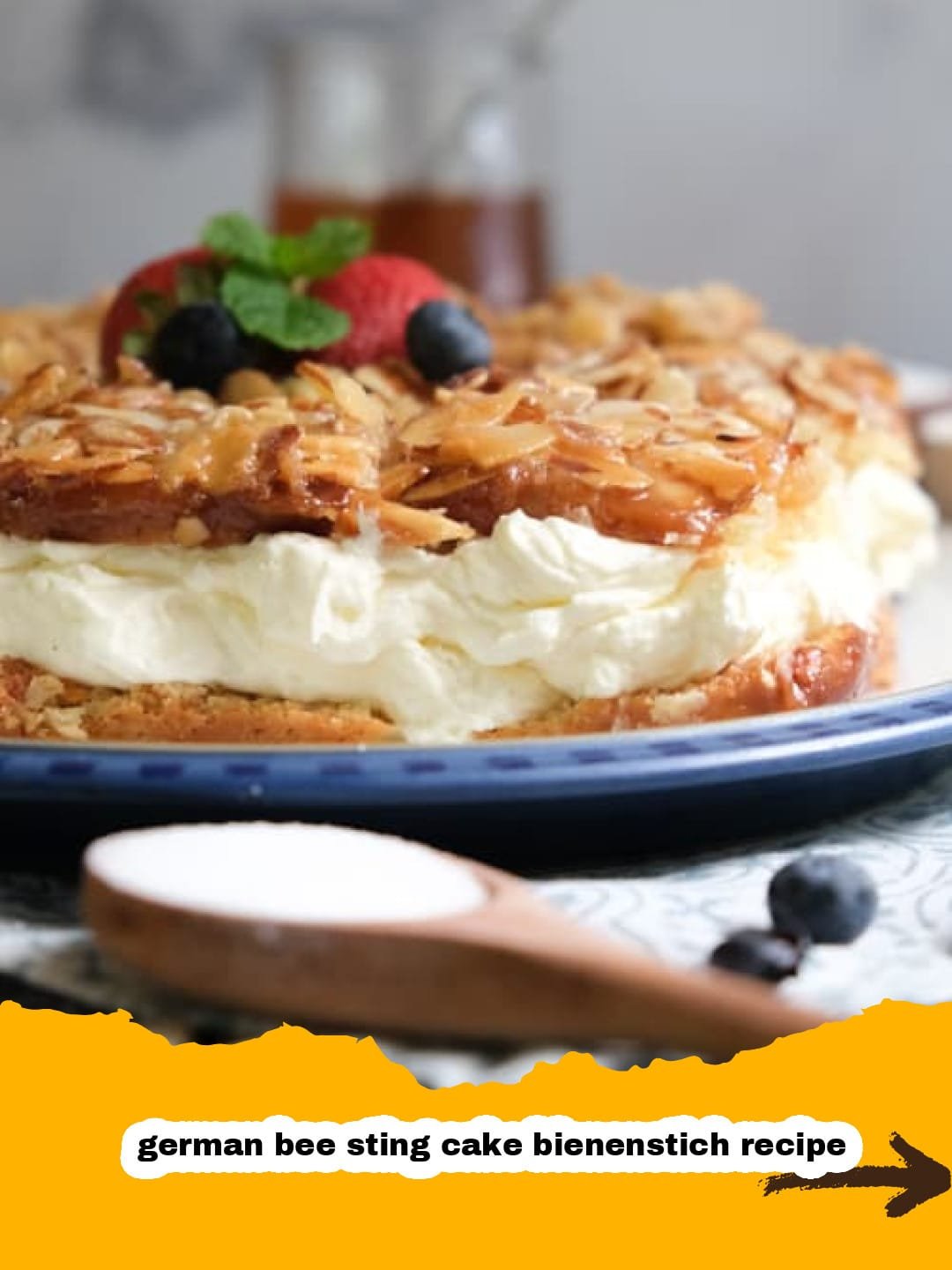
- Unforgettable Flavor Profile: This German Bienenstich (Bee Sting Cake) boasts a harmonious blend of tender yeast cake, a rich, creamy vanilla custard, and a crisp, caramelized almond-honey topping that creates an explosion of textures and flavors in every bite.
- Impressive Presentation: With its golden, glossy top and creamy layers, German Bienenstich (Bee Sting Cake) is a showstopper. It looks incredibly sophisticated, making it perfect for special occasions or simply to impress your guests.
- A Taste of German Tradition: Beyond just a dessert, making German Bienenstich (Bee Sting Cake) is an experience rooted in rich culinary heritage. It’s a classic that has delighted generations and brings a touch of old-world charm to your table.
- Surprisingly Rewarding: While it has a few steps, the process of making German Bienenstich (Bee Sting Cake) is incredibly satisfying, especially when you see the final, stunning result. It's a true baking achievement!
Key Ingredient Notes for Perfect German Bienenstich (Bee Sting Cake)
Crafting the perfect German Bienenstich (Bee Sting Cake) involves understanding a few crucial ingredients:
Active Dry Yeast
The yeast is the heart of your cake, giving it that characteristic light, airy texture. Always check the expiration date on your yeast. If it's old, your cake won't rise properly. To test its viability, proof it by dissolving it in warm milk (around 105-115°F or 40-46°C) with a pinch of sugar. If it doesn't get foamy within 5-10 minutes, it's best to get fresh yeast. A lively yeast ensures a wonderfully fluffy base for your German Bienenstich (Bee Sting Cake).
Blanched Sliced Almonds
These are essential for the iconic 'bee sting' topping. Blanched almonds have had their skins removed, resulting in a cleaner look and a milder, more delicate flavor that caramelizes beautifully. You can blanch whole almonds yourself by soaking them in hot water for a minute, then slipping off the skins, but buying pre-sliced blanched almonds saves a lot of time and ensures even slices for a perfect German Bienenstich (Bee Sting Cake) topping. The thickness of the slices impacts the crunch, so try to use uniformly sliced ones.
Vanilla Bean or High-Quality Vanilla Extract
The vanilla cream filling is a star component, and its flavor is paramount. While a good quality vanilla extract works, nothing beats the fragrant complexity of a fresh vanilla bean. If using a bean, split it lengthwise and scrape out the seeds to infuse into your milk for the custard. This elevates the German Bienenstich (Bee Sting Cake) to another level of gourmet deliciousness. If using extract, opt for pure vanilla extract, not imitation, for the best flavor.
Step-by-Step Guide with Pro Tips for German Bienenstich (Bee Sting Cake)
For the Yeast Cake:
- Step 1: In a small bowl, gently warm the milk to about 105-115°F (40-46°C). Sprinkle the active dry yeast and a teaspoon of sugar over the milk. Let it sit for 5-10 minutes until foamy. This confirms your yeast is active.
- Step 2: In a large mixing bowl, combine the all-purpose flour, remaining sugar, and a pinch of salt. Make a well in the center.
- Step 3: Add the melted butter, egg, and the activated yeast mixture to the well. Mix with a wooden spoon or stand mixer with a dough hook until a shaggy dough forms.
- Step 4: Turn the dough out onto a lightly floured surface and knead for about 8-10 minutes, or until smooth, elastic, and no longer sticky.
- Step 5: Place the dough in a lightly oiled bowl, turning once to coat. Cover with plastic wrap or a damp cloth and let it rise in a warm place for 1-1.5 hours, or until doubled in size. Pro Tip: A slightly warm oven (turned off, with just the light on) is an excellent spot for rising dough.
For the Almond Topping:
- Step 6: While the dough is rising, prepare the almond topping. In a saucepan, melt the butter over medium heat. Add the sugar, honey, and heavy cream. Bring to a gentle boil, stirring constantly.
- Step 7: Remove from heat and stir in the blanched sliced almonds. Let it cool slightly. Pro Tip: Don't let it boil too vigorously or for too long, as it can crystalize. You want a thick, syrupy consistency.
Assembling and Baking the German Bienenstich (Bee Sting Cake):
- Step 8: Once the dough has doubled, gently punch it down. Roll it out on a lightly floured surface into a 10-inch circle. Carefully transfer the dough to a greased 10-inch springform pan.
- Step 9: Spread the cooled almond topping evenly over the dough.
- Step 10: Cover the pan loosely with plastic wrap and let the cake rise again in a warm place for another 30-45 minutes, or until visibly puffy. Pro Tip: This second rise is crucial for a light cake texture, especially with the weight of the topping.
- Step 11: Preheat your oven to 350°F (175°C).
- Step 12: Bake for 30-35 minutes, or until the cake is golden brown and the almond topping is caramelized and bubbly. If the topping browns too quickly, you can loosely tent it with foil.
- Step 13: Remove from the oven and let it cool completely in the pan on a wire rack. Once cool, carefully remove it from the springform pan. Pro Tip: Ensure it's fully cooled before attempting to slice or fill, or it may collapse.
For the Vanilla Cream Filling:
- Step 14: In a medium saucepan, whisk together the egg yolks, sugar, cornstarch, and a pinch of salt until smooth.
- Step 15: Gradually whisk in the milk. If using a vanilla bean, add the scraped seeds and the pod to the milk mixture.
- Step 16: Cook over medium heat, whisking constantly, until the mixture thickens significantly and comes to a gentle boil. Continue to cook and whisk for another minute to ensure the cornstarch is fully cooked.
- Step 17: Remove from heat. If you used a vanilla bean pod, remove it. Stir in the butter and vanilla extract (if not using a bean).
- Step 18: Pour the custard into a clean bowl, cover the surface directly with plastic wrap to prevent a skin from forming, and chill in the refrigerator for at least 2-3 hours, or until completely cold and firm.
- Step 19: In a separate bowl, whip the heavy cream until stiff peaks form.
- Step 20: Once the custard is chilled, gently fold the whipped cream into the cold custard until fully combined and light. This creates the luscious cream filling for your German Bienenstich (Bee Sting Cake).
Assembling the German Bienenstich (Bee Sting Cake):
- Step 21: Carefully slice the cooled cake horizontally into two layers using a long serrated knife. A trick for even slicing is to use toothpicks as guides around the cake's circumference.
- Step 22: Spread the vanilla cream filling generously over the bottom cake layer.
- Step 23: Carefully place the top cake layer (with the almond topping) over the cream filling. Pro Tip: This step requires a gentle hand! You can use a wide spatula or a cake lifter.
- Step 24: Chill the assembled German Bienenstich (Bee Sting Cake) for at least 1 hour before serving to allow the filling to set and the flavors to meld. Slice with a sharp, serrated knife for clean cuts.
Variations & Serving Suggestions for German Bienenstich (Bee Sting Cake)
While the classic German Bienenstich (Bee Sting Cake) is perfect as is, there are always ways to introduce slight variations or enhance the serving experience:
Flavor Variations:
- Citrus Zest: Add a teaspoon of lemon or orange zest to the cake dough for a subtle bright note that complements the rich filling and topping.
- Nutty Alternatives: While almonds are traditional, you could experiment with other nuts for the topping, such as slivered pistachios or chopped walnuts for a different texture and flavor profile. Remember, it wouldn't be quite a traditional German Bienenstich (Bee Sting Cake) with other nuts, but it would be delicious!
- Fruit Infusion: For a fresh twist, you could lightly fold a small amount of fresh berries (like raspberries or blueberries) into the vanilla cream filling just before assembling. Ensure they are well-drained to avoid making the filling watery.
- Caramel Drizzle: A light drizzle of homemade or store-bought caramel sauce over each slice just before serving adds an extra layer of sweetness and decadence.
Serving Suggestions:
- With Coffee or Tea: German Bienenstich (Bee Sting Cake) is the quintessential afternoon coffee cake. Serve it with a freshly brewed cup of coffee or a comforting mug of tea for a delightful break.
- Dessert Platter: Present slices of German Bienenstich (Bee Sting Cake) alongside other European-inspired desserts, like a slice of Earthquake Cake or a mini Divine Quick Raspberry Trifle, for an impressive dessert spread.
- Warm Berry Compote: A small side of warm, lightly sweetened berry compote can cut through the richness of the cream and add a lovely fruity contrast.
- A Scoop of Ice Cream: For a truly indulgent experience, serve a slice of German Bienenstich (Bee Sting Cake) with a scoop of vanilla bean or almond-flavored ice cream.
Remember that the German Bienenstich (Bee Sting Cake) is best enjoyed fresh, ideally within 2-3 days of baking. Store any leftovers in an airtight container in the refrigerator. For longer storage, slices can be individually wrapped and frozen for up to a month. Just be sure to thaw them in the refrigerator before serving. And if you're looking for great storage solutions for your baked goods, consider using Basics Glass Food Storage containers to keep your treats fresh!
Nutrition Information
| Nutrient | Amount per serving |
|---|---|
| Calories | 450 kcal |
| Carbohydrate Content | 50 g |
| Cholesterol Content | 120 mg |
| Fat Content | 28 g |
| Fiber Content | 2 g |
| Protein Content | 8 g |
| Saturated Fat Content | 15 g |
| Serving Size | 1 slice |
| Sodium Content | 200 mg |
| Sugar Content | 30 g |
| Trans Fat Content | 0.5 g |
| Unsaturated Fat Content | 10 g |
Making German Bienenstich (Bee Sting Cake) is more than just following a recipe; it's about embracing a tradition, creating memories, and savoring a piece of culinary history. This cake, with its delicate yeast base, creamy vanilla filling, and irresistible caramelized almond topping, is truly a labor of love that rewards you with every golden slice. Whether you're making it for a special occasion or simply to treat yourself to a taste of Germany, I hope this German Bienenstich (Bee Sting Cake) brings as much joy to your kitchen and your palate as it does to mine. Happy baking!
FAQs
What is German Bienenstich (Bee Sting Cake)?
German Bienenstich, or Bee Sting Cake, is a traditional German dessert consisting of a sweet yeast cake base, a luscious vanilla cream or custard filling, and a signature crunchy topping made from caramelized honey and sliced almonds. It gets its name from its sweet, honey-almond topping, reminiscent of a bee sting.
Can I make German Bienenstich (Bee Sting Cake) ahead of time?
Yes, German Bienenstich (Bee Sting Cake) can be made a day in advance. Assemble the cake and store it in an airtight container in the refrigerator. The flavors often meld beautifully overnight, and the cake remains fresh and delicious. It is best enjoyed within 2-3 days.
Why is my Bienenstich cake dough not rising?
There are several reasons your German Bienenstich (Bee Sting Cake) dough might not be rising. The most common causes are inactive yeast (always proof your yeast first), milk that is too hot or too cold (optimal temperature is 105-115u00b0F), or a cold environment for rising. Ensure your yeast is fresh and your rising spot is warm and draft-free.
What is the best way to store leftover German Bienenstich (Bee Sting Cake)?
Due to its creamy filling, German Bienenstich (Bee Sting Cake) must be stored in the refrigerator. Keep it in an airtight container to prevent it from drying out or absorbing other odors. It will stay fresh for up to 3 days. For longer storage, individual slices can be wrapped and frozen for up to a month, then thawed in the refrigerator.
German Bienenstich (Bee Sting Cake)
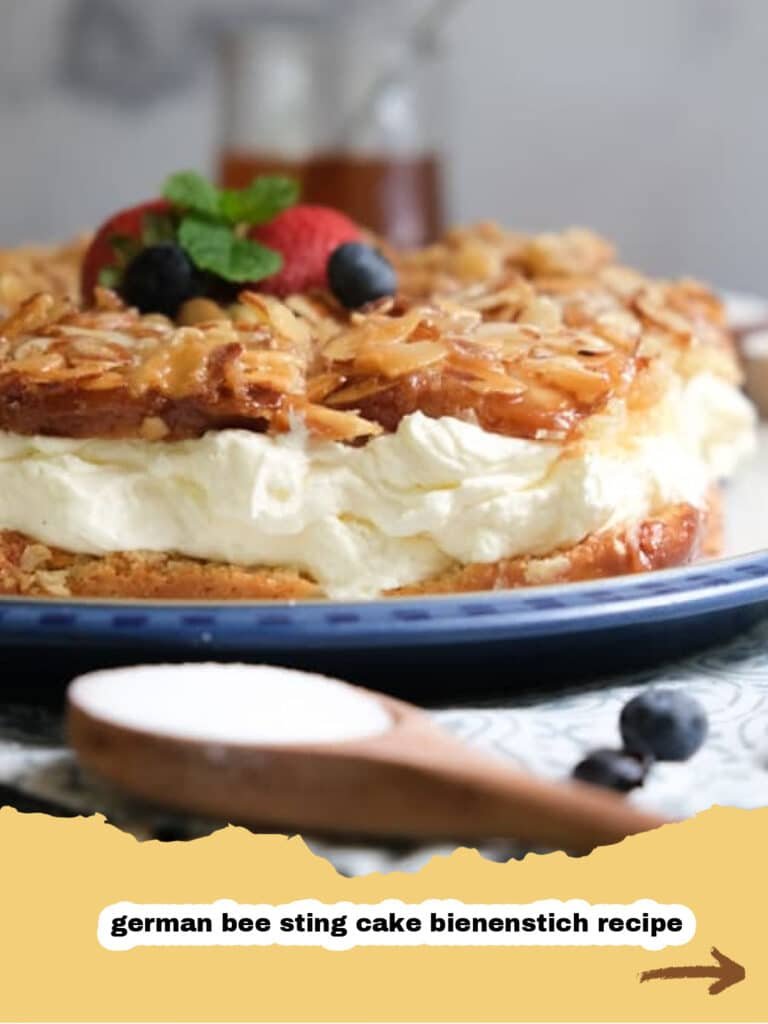
A classic German dessert featuring a sweet yeast cake base, a rich vanilla cream custard filling, and a crunchy, caramelized almond and honey topping. This iconic cake is a true showstopper!
- Total Time: 2 hours 5 minutes (plus chilling time)
- Yield: 12 servings
Ingredients
1 cup (240ml) warm milk (105-115°F / 40-46°C)
2 ¼ teaspoons active dry yeast (1 packet)
½ cup (100g) granulated sugar, divided
3 ½ cups (420g) all-purpose flour
½ teaspoon salt
½ cup (113g) unsalted butter, melted
1 large egg
For the Almond Topping:
½ cup (113g) unsalted butter
½ cup (100g) granulated sugar
¼ cup (60ml) honey
¼ cup (60ml) heavy cream
1 ½ cups (150g) blanched sliced almonds
For the Vanilla Cream Filling:
4 large egg yolks
½ cup (100g) granulated sugar
¼ cup (30g) cornstarch
Pinch of salt
2 cups (480ml) whole milk
1 vanilla bean, split and scraped (or 2 teaspoons pure vanilla extract)
2 tablespoons (28g) unsalted butter
1 cup (240ml) heavy cream, whipped to stiff peaks
Instructions
Step 1: In a small bowl, warm the milk to about 105-115°F (40-46°C). Sprinkle yeast and 1 teaspoon of the sugar over the milk. Let it sit for 5-10 minutes until foamy, indicating the yeast is active.
Step 2: In a large mixing bowl, combine the flour, remaining sugar, and salt. Make a well in the center.
Step 3: Add the melted butter, egg, and activated yeast mixture to the well. Mix with a wooden spoon or a stand mixer with a dough hook until a shaggy dough forms.
Step 4: Turn the dough out onto a lightly floured surface and knead for 8-10 minutes until smooth and elastic.
Step 5: Place the dough in a lightly oiled bowl, turn once to coat, cover, and let rise in a warm place for 1-1.5 hours, or until doubled in size.
Step 6: While the dough rises, prepare the almond topping. In a saucepan, melt 1/2 cup butter over medium heat. Add 1/2 cup sugar, honey, and 1/4 cup heavy cream. Bring to a gentle boil, stirring constantly.
Step 7: Remove from heat and stir in the blanched sliced almonds. Let it cool slightly.
Step 8: Once the dough has doubled, gently punch it down. Roll it out into a 10-inch circle and carefully transfer it to a greased 10-inch springform pan.
Step 9: Spread the cooled almond topping evenly over the dough.
Step 10: Cover the pan loosely and let the cake rise again in a warm place for another 30-45 minutes, or until puffy.
Step 11: Preheat your oven to 350°F (175°C).
Step 12: Bake for 30-35 minutes, or until the cake is golden brown and the almond topping is caramelized and bubbly. Loosely tent with foil if browning too quickly.
Step 13: Remove from the oven and let cool completely in the pan on a wire rack before carefully removing from the springform pan.
Step 14: For the filling, whisk together egg yolks, 1/2 cup sugar, cornstarch, and a pinch of salt in a medium saucepan until smooth.
Step 15: Gradually whisk in 2 cups milk. Add scraped vanilla seeds and pod (if using).
Step 16: Cook over medium heat, whisking constantly, until the mixture thickens significantly and boils gently. Continue whisking for 1 minute.
Step 17: Remove from heat. Remove vanilla pod. Stir in 2 tablespoons butter and vanilla extract (if not using a bean).
Step 18: Pour custard into a clean bowl, cover surface directly with plastic wrap, and chill for 2-3 hours until completely cold and firm.
Step 19: In a separate bowl, whip 1 cup heavy cream until stiff peaks form.
Step 20: Once custard is chilled, gently fold the whipped cream into the cold custard until fully combined and light.
Step 21: Carefully slice the cooled cake horizontally into two layers using a long serrated knife.
Step 22: Spread the vanilla cream filling generously over the bottom cake layer.
Step 23: Carefully place the top cake layer (with the almond topping) over the cream filling.
Step 24: Chill the assembled cake for at least 1 hour before serving to allow the filling to set and flavors to meld. Slice with a sharp, serrated knife.
Notes
Ensure all ingredients are at room temperature for optimal dough rising. Chill the custard thoroughly before folding in whipped cream to prevent it from becoming runny. For best results, serve the cake chilled.
- Prep Time: 1 hour 30 minutes
- Cook Time: 35 minutes
- Category: Dessert
- Cuisine: German
Nutrition
- Serving Size: 1 slice
- Calories: 450 kcal
- Sugar: 30 g
- Sodium: 200 mg
- Fat: 28 g
- Saturated Fat: 15 g
- Unsaturated Fat: 10 g
- Trans Fat: 0.5 g
- Carbohydrates: 50 g
- Fiber: 2 g
- Protein: 8 g
- Cholesterol: 120 mg





Leave a Reply