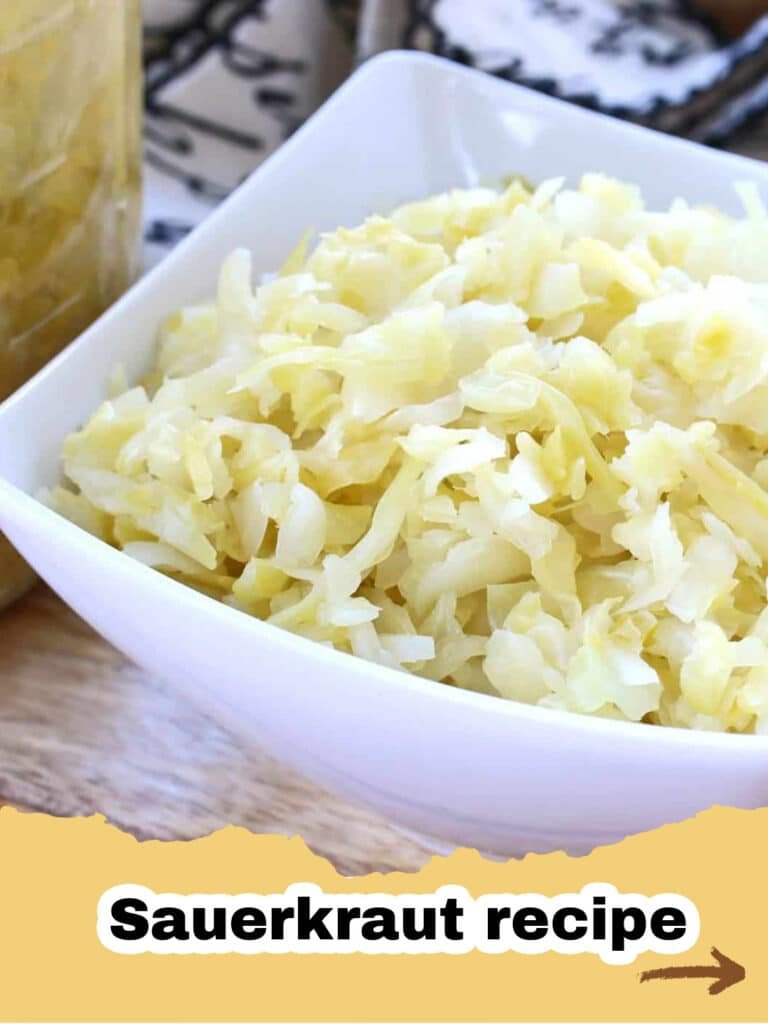
Ingredients
5 lbs (about 2.2 kg) green cabbage
2-3 tablespoons non-iodized salt (pickling salt, sea salt, or Himalayan pink salt)
Optional: Filtered water (if cabbage doesn't release enough brine)
Instructions
Step 1: Prepare the Cabbage. Remove any bruised or damaged outer leaves from the cabbage head. Reserve one or two large, clean outer leaves for later use. Cut the cabbage into quarters and remove the core. Shred the cabbage finely, about 1/8 to 1/4 inch thick. A sharp knife or mandoline works best here. Aim for consistent shreds for even fermentation when you make sauerkraut.
Step 2: Salt the Cabbage. Place the shredded cabbage into a very large mixing bowl. Sprinkle the salt evenly over the cabbage. The general rule of thumb is 2-3 tablespoons of non-iodized salt per 5 pounds of cabbage. Begin to massage the salt into the cabbage vigorously with your clean hands. This is the most crucial part of how to make sauerkraut. Continue massaging for 5-10 minutes, or until the cabbage starts to release its liquid and becomes significantly softer. It should look wet and limp.
Step 3: Pack the Cabbage. Transfer the salted cabbage into your clean fermentation vessel (crock or glass jar). Pack it down very firmly, pressing out any air pockets. You can use a clean fist, a kraut pounder, or a sturdy spoon. The goal is to submerge all the cabbage under its own brine. If, after firmly packing, there isn't enough brine to cover the cabbage, you may need to add a supplemental brine. To do this, dissolve 1 teaspoon of non-iodized salt in 1 cup of filtered water and add just enough to cover the cabbage.
Step 4: Submerge and Weigh Down. Place the reserved outer cabbage leaves over the shredded cabbage to help keep smaller pieces submerged. Then, place a fermentation weight directly on top of the cabbage, ensuring all the shredded cabbage remains fully submerged under the brine. This is vital to prevent mold growth. You can use purpose-made weights or even a smaller, clean jar filled with water placed on top of a plate.
Step 5: Ferment. Cover the fermentation vessel loosely with a lid, a clean cloth, or an airlock system. Store the vessel at room temperature, ideally between 60-75°F (15-24°C), away from direct sunlight. Check your sauerkraut every day or two. You should see bubbles forming, which indicates active fermentation. If any scum or mold forms on the surface, carefully skim it off with a clean spoon. As an expert in how to make sauerkraut, I always keep an eye on the fermenting process.
Step 6: Taste and Store. Begin tasting your sauerkraut after 3-4 weeks. The fermentation time will vary depending on the temperature and your desired level of tanginess and texture. Once it reaches your preferred taste, transfer the sauerkraut (and its brine) to clean jars, ensuring the cabbage remains submerged. Store it in the refrigerator, where it will continue to slowly ferment and keep for several months.
Notes
Always use non-iodized salt and filtered water to ensure successful fermentation. Keep all equipment meticulously clean to prevent spoilage. The ideal fermentation temperature is 60-75°F (15-24°C). If using a crock, make sure it has a water seal. For jars, burp them daily or use airlock lids.
- Prep Time: 30 minutes
- Cook Time: 3-4 weeks (fermentation)
- Category: Fermented Foods
- Cuisine: German
Nutrition
- Serving Size: 1/2 cup (70g)
- Calories: 15 kcal
- Sugar: 1.5 g
- Sodium: 460 mg
- Fat: 0.1 g
- Saturated Fat: 0 g
- Unsaturated Fat: 0.1 g
- Trans Fat: 0 g
- Carbohydrates: 3.5 g
- Fiber: 1.5 g
- Protein: 0.8 g
- Cholesterol: 0 mg